Things To Do In Doha: Full Guide For First-Time Visitors
Doha is one of those cities that surprises you from the moment you arrive. It’s a place where tradition meets modernity — where futuristic skyscrapers stand next to cultural villages, lively souqs, world-class museums, peaceful parks, and even endless desert just an hour away.
During my visit, I explored the city’s most interesting neighborhoods, iconic landmarks, and a few lesser-known spots that truly show Doha’s spirit. Here, I’m sharing the best things to do in Doha, along with practical tips to help you make the most of your first time in Qatar’s capital.
Things To Do In Doha
Souq Waqif
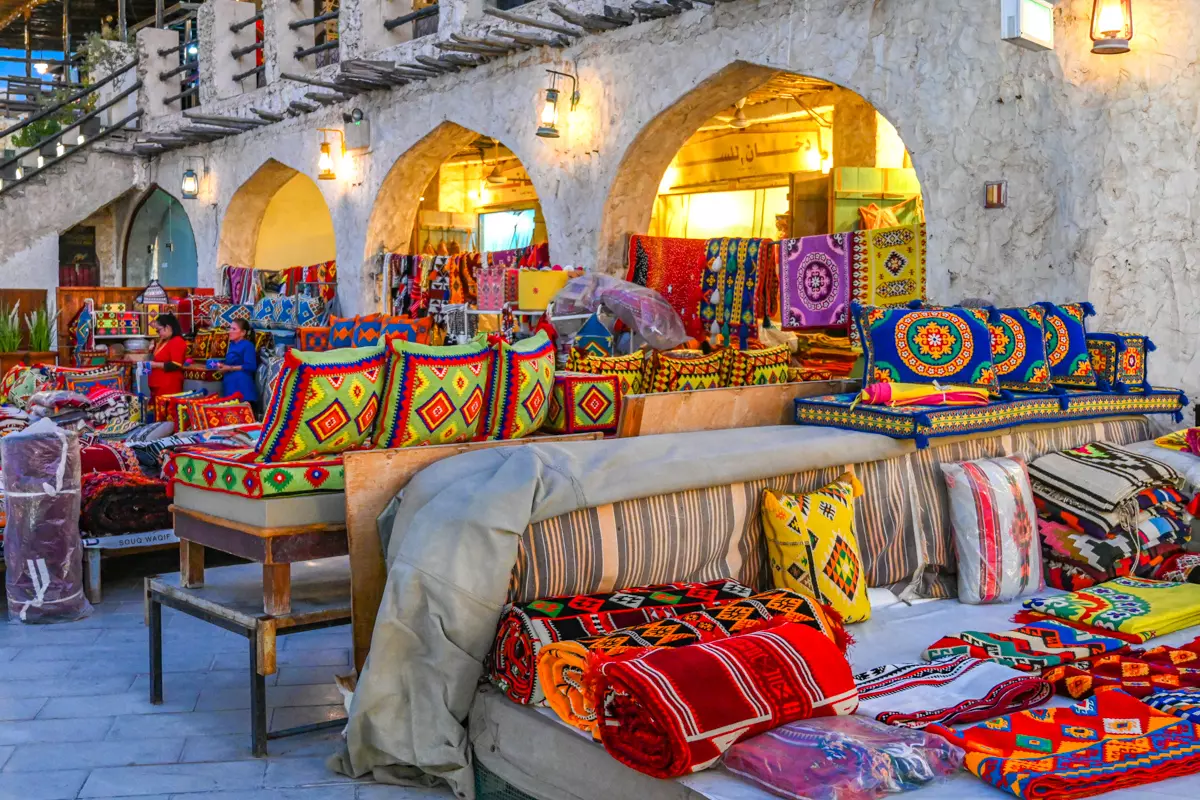
Souq Waqif is a place where the beauty of old Doha comes to life, and it was here that I began my exploration of Qatar’s capital. Among the narrow streets, the lingering scent of spices in the air, and the warm smiles, you can truly feel the pulse of the city. From the very first steps, the market captivated me. Its chaotic buzz, the many little shops, and cozy cafes simply draw you in. The shops tempt visitors with colorful fabrics, handmade jewelry, traditional fragrances, various souvenirs, and sweets.
As you wander between the buildings, where every turn brings new experiences, it’s easy to give in to the market’s charm. This becomes especially noticeable in the evenings, when Souq Waqif comes even more alive. Cafes fill with people, music drifts through the air, and the streets are overtaken by lively bustle. I visited the market both during the day and in the evening, but I enjoyed the evening stroll more. Of course, I didn’t miss the chance to try some local treats and picked up a few small souvenirs to bring home.
Doha Corniche
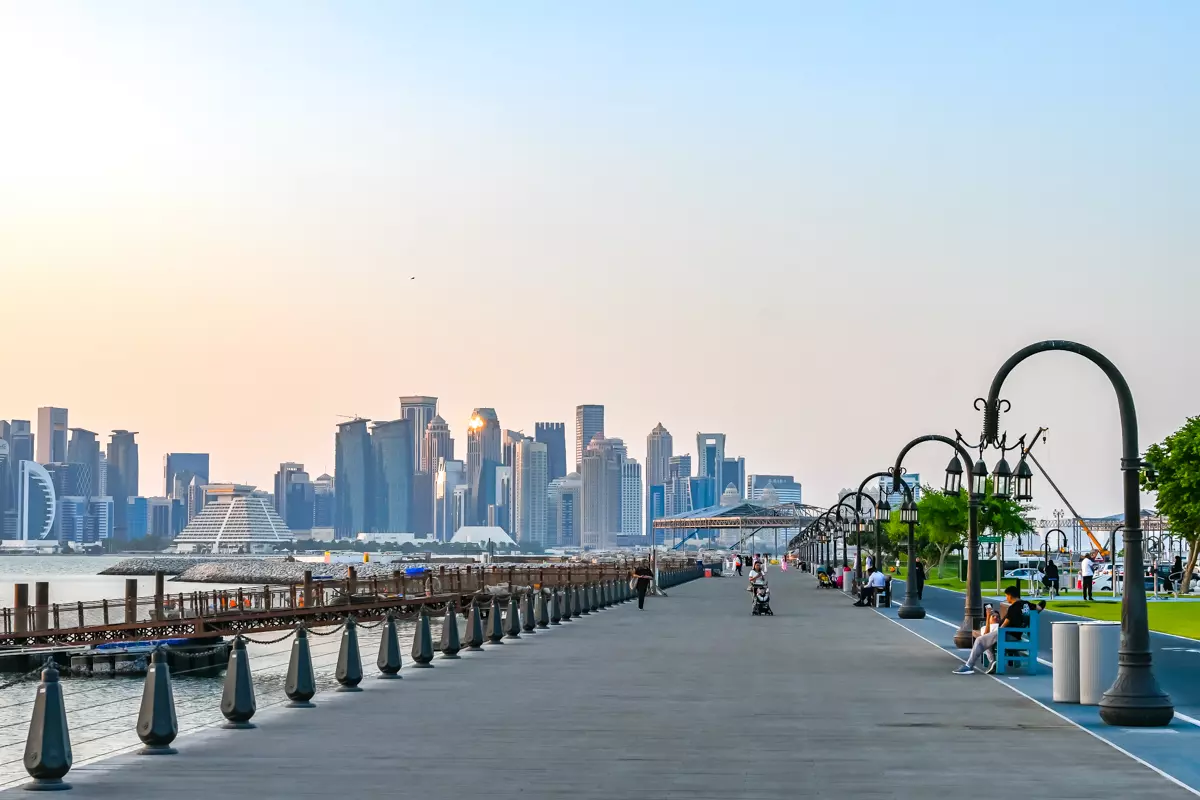
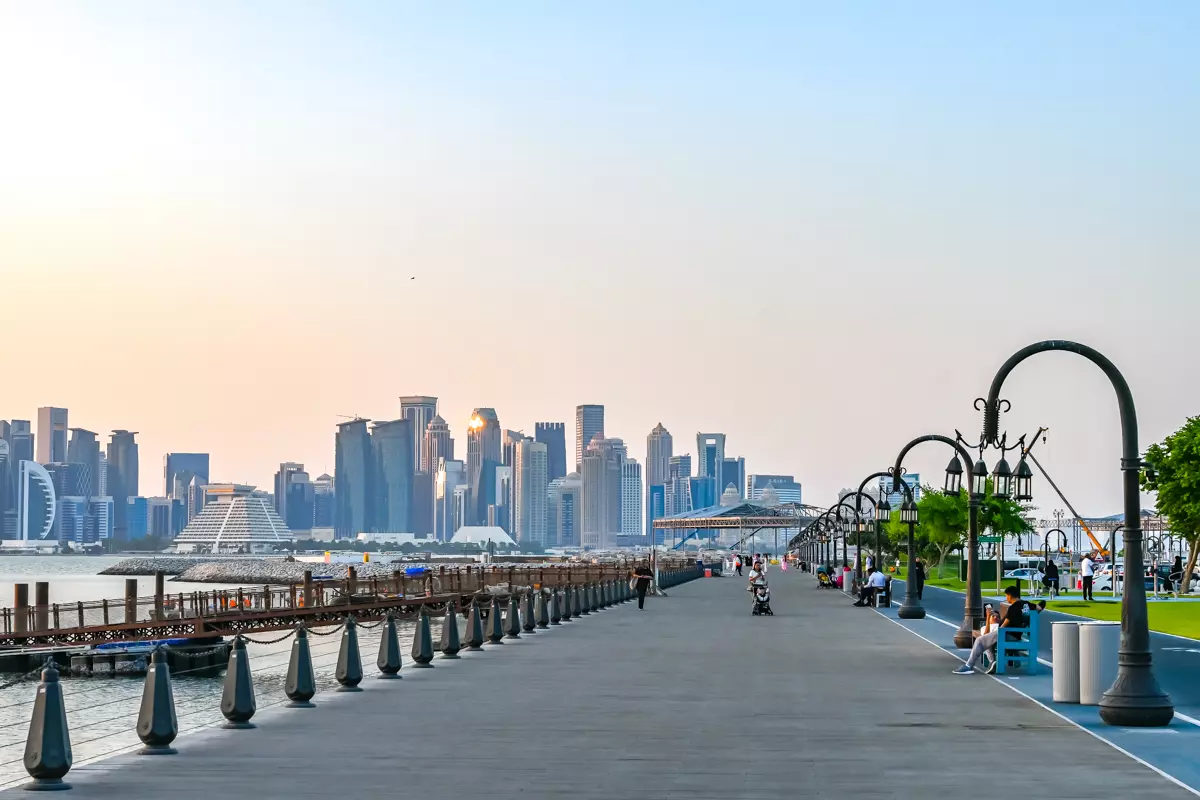
The Doha Corniche is not just a 7-kilometer seaside promenade, but truly the heart of the city. It stretches along the bay, where the shimmering skyscrapers instantly catch your eye. Here, you can meet both local residents and curious travelers at any time of day. Since I was staying nearby, I went for walks along the promenade many times.
In the mornings, you can spot runners, yoga enthusiasts, and photographers capturing the first rays of sunlight over the bay. In the evening, when the sky turns shades of orange and pink, the Corniche becomes one of the liveliest spots in the city. People sit on benches or relax in the parks, families enjoy picnics, and the calm of the evening washes away the day’s fatigue.
Tip: Dhow boats depart from the Corniche, and you can book a trip either on the spot or online in advance.
Accommodation: Here are all your hotel options in Doha.
Katara Cultural Village
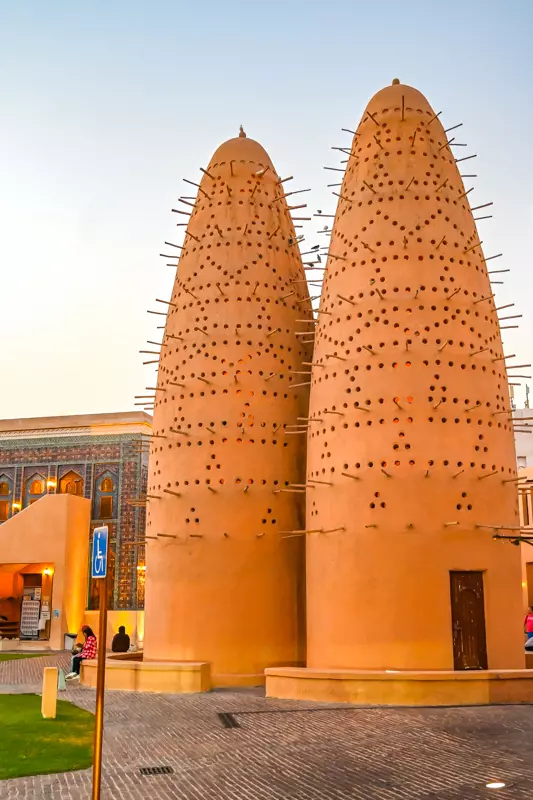
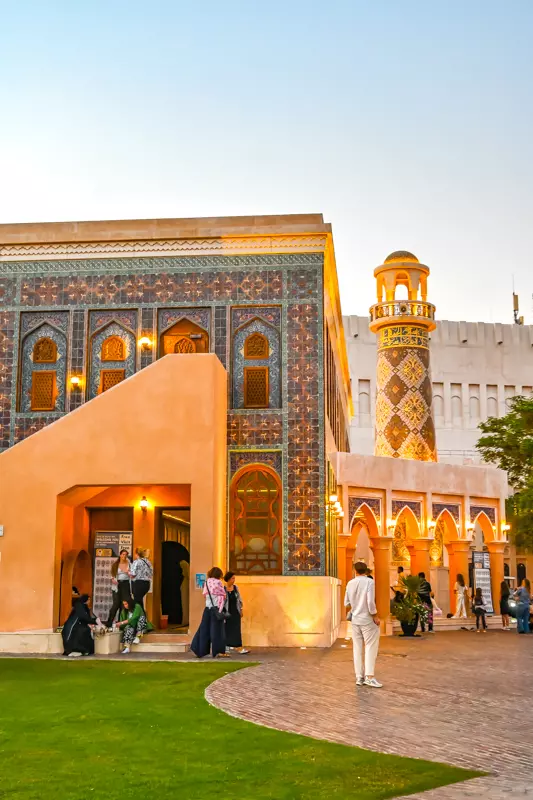
Visiting Katara Cultural Village is one of the most remarkable things to do in Doha. It is a cultural hub where the worlds of art, tradition, and modernity come together. The space was created to preserve Qatar’s heritage while also providing a platform for contemporary art to flourish.
As you walk through Katara Cultural Village, the first thing that catches your eye is the impressive architecture: traditional buildings with sand-colored facades, elegant arches, and distinctive theater and gallery complexes. International art exhibitions, photography showcases, open-air concerts, and even opera performances in the amphitheater are frequently held here.
Across the Katara grounds, you will also find the Pigeon Towers. These traditional dovecotes have become something of a symbol of the city. They are fascinating not only from an architectural perspective but also because they reflect old Qatari traditions, when pigeons played an important role in everyday life.
Next to the Pigeon Towers, you’ll find the beautiful Katara Mosque, and I highly recommend stepping inside. Free guided tours are often available, offering an opportunity to learn more about Islamic traditions and culture. If you don’t have appropriate clothing, don’t worry — suitable attire is provided on-site.
Museum Of Islamic Art (MIA)
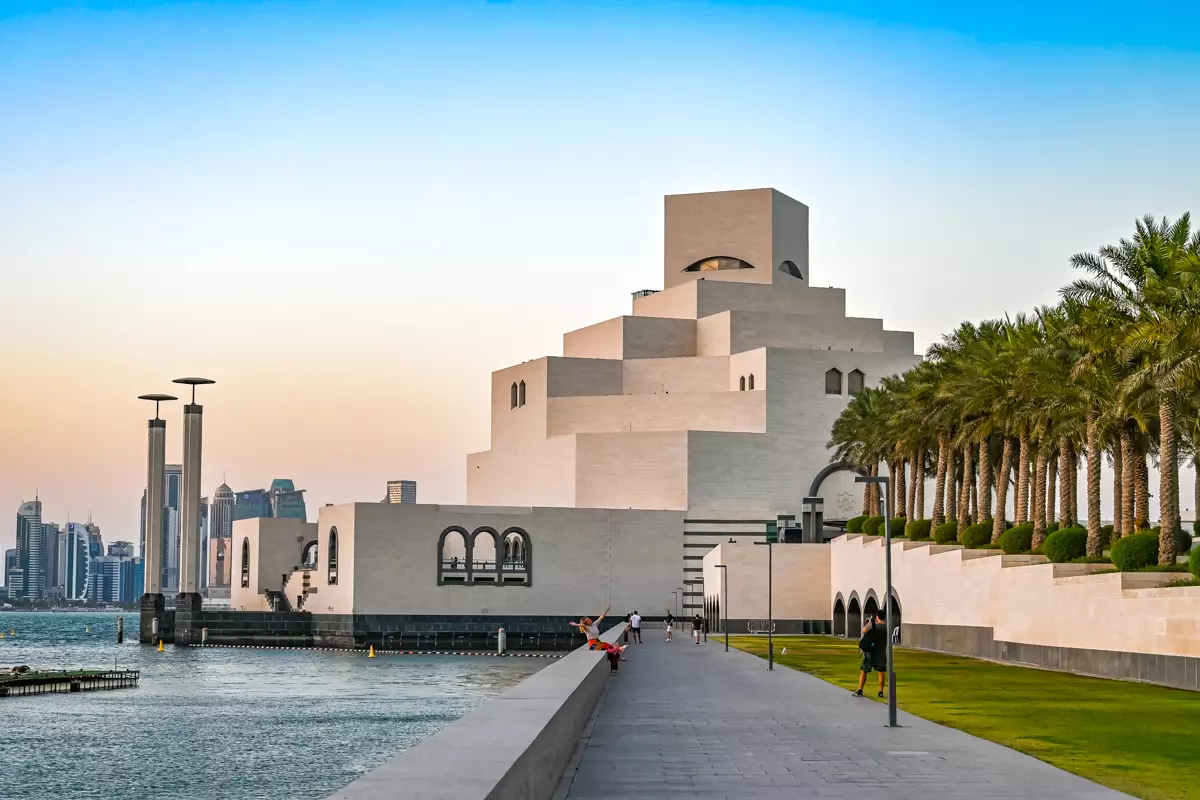
The Museum of Islamic Art is one of Doha’s most prominent museums, proudly standing on an artificial island along the Corniche waterfront. The building catches your eye immediately, even from afar. It features modern geometric architecture designed by the renowned I. M. Pei.
While the exterior is impressive, the true treasure lies inside. MIA houses an extensive collection of Islamic art spanning more than a thousand years — from Spain to Central Asia. Here you’ll find remarkable works of art, including ceramics, textiles, calligraphy, jewelry, and rare manuscripts. Each gallery feels like a story of its own, allowing you to journey through different eras and regions.
Once you reach the upper floors, one of the most beautiful views of Doha opens up before you. And if you stop by the museum cafe, you can enjoy the scenery with a cup of coffee.
Ticket Price & Opening Hours: The entrance fee is €12 (50 QAR). The museum is open from 9 A.M. to 7 P.M. on Saturday through Tuesday, from 9 A.M. to 9 P.M. on Thursdays, and from 1:30 P.M. to 7 P.M. on Fridays. The museum is closed on Wednesdays.
National Museum Of Qatar
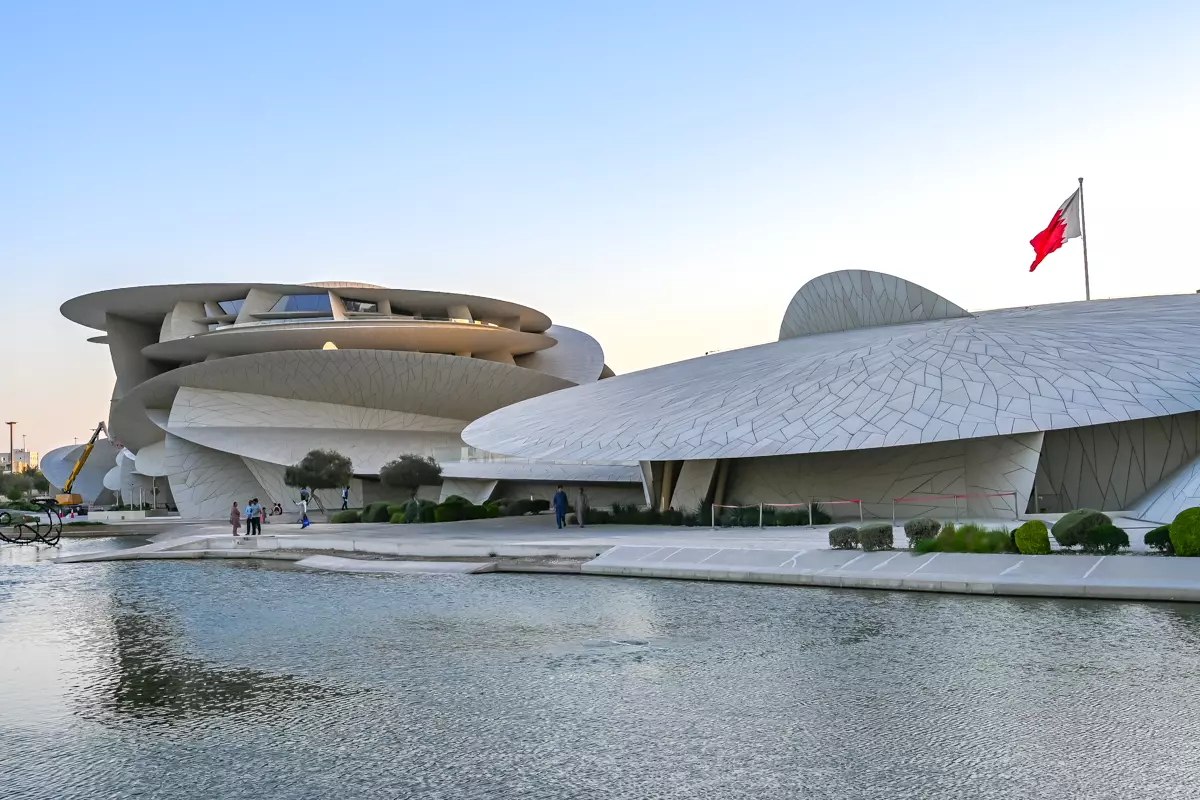
Another museum worth visiting in Doha is the National Museum of Qatar. It is an impressive architectural creation that immediately captures your attention with its striking, unusual shape. The building resembles a desert rose — a naturally formed mineral whose crystal structure inspired architect Jean Nouvel.
The museum showcases old dhow boats, jewelry, traditional household items, maps, historical documents, and authentic clothing that reveal what everyday life looked like before the wave of modernization. There are also interactive galleries that both children and adults will enjoy.
One of the museum’s most fascinating highlights is the reconstruction of traditional living spaces. Here you can see what old Qatari homes looked like and which elements played an important role in daily life. A significant focus is placed on pearl diving, which was once an essential part of the country’s history before the oil era.
The museum also features galleries dedicated to modern history, showcasing images and stories about the nation’s growth, the construction of modern cities, and the incredible transformation that took place in just a few decades.
Ticket Price & Opening Hours: The entrance fee is €6 (25 QAR). The museum is open from 9 A.M. to 7 P.M. on Sunday, Monday, Wednesday, and Saturday, from 9 A.M. to 9 P.M. on Thursdays, and from 1:30 P.M. to 7 P.M. on Fridays. The museum is closed on Tuesdays.
Msheireb Downtown
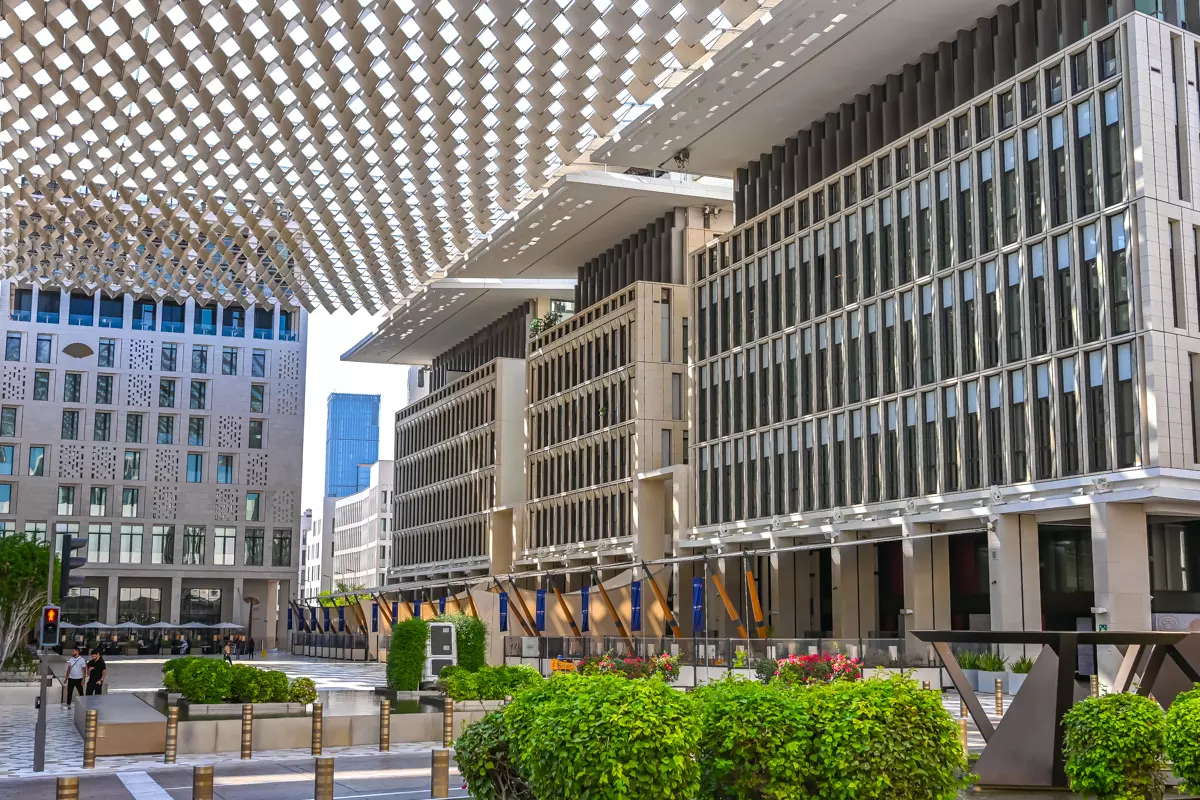
In Msheireb Downtown, everything is refined down to the smallest detail, and the entire district radiates luxury. As you walk through the area, it feels as though the world’s most famous and luxurious brands have gathered here. The prices of the items and clothing displayed in the shop windows are truly jaw-dropping. I’ll admit, I didn’t even dare go inside — I knew that with my budget, I wouldn’t be able to afford even the smallest trinket.
Still, what impressed me the most wasn’t the architecture, but my visit to the slavery museum located in the district, officially called Bin Jelmood House. I spent a couple of hours there because I wasn’t expecting such an abundance of information. At the museum, I learned more about the history of slavery in the region. It showed how it shaped people’s lives, how society changed, and how it influenced local culture. I was especially moved by the stories about descendants, traditions, and the people who lived here long before the city’s modernization began.
If you have more time, it’s worth knowing that Msheireb also has several other museums. Company House tells the story of the early oil industry and its workers, Radwani House reveals the everyday life of a traditional family, and Mohammed Bin Jassim House presents the city’s development and architectural transformation.
Ticket Price & Opening Hours: Msheireb Museums are open Monday to Thursday from 9:00 to 17:00, and also on Saturdays from 9:00 to 17:00. On Fridays, the museums come to life in the afternoon — from 15:00 to 21:00. Sunday is a rest day, but the best part is that admission is completely free.
Lusail Boulevard
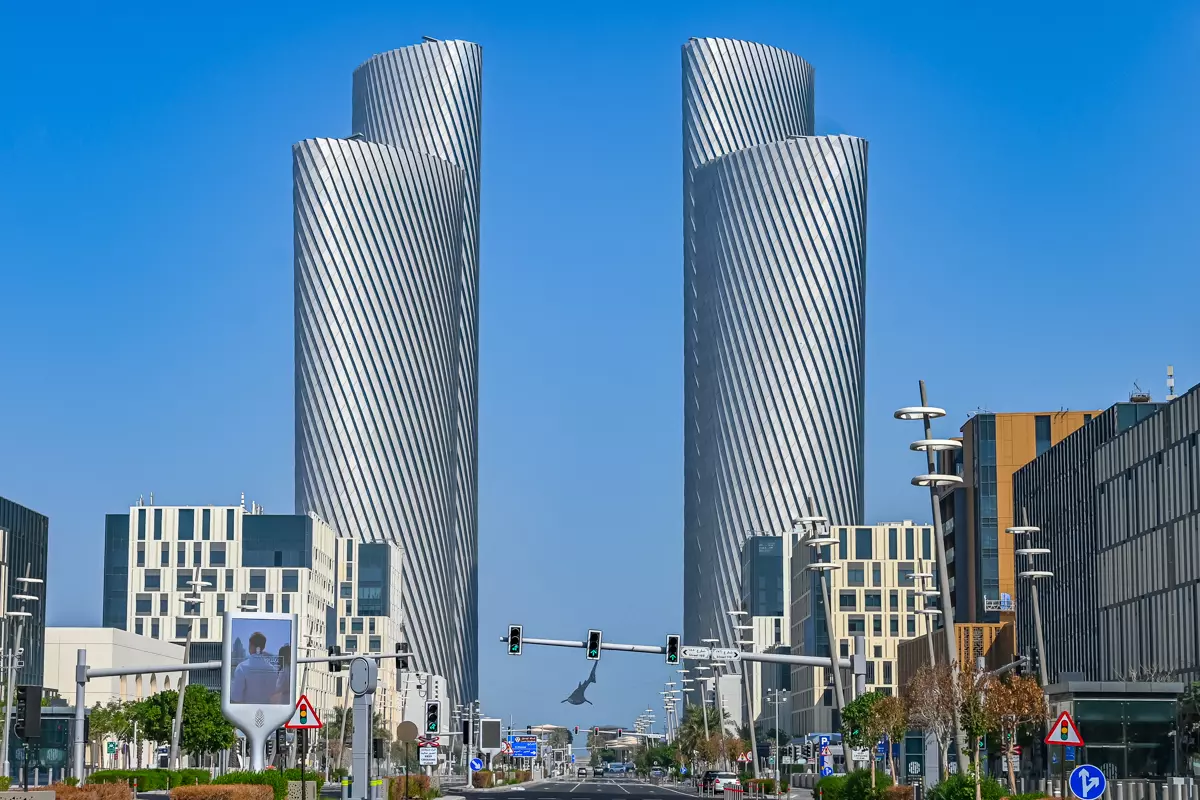
Lusail Boulevard is one of Doha’s newest urban spaces, a wide and modern pedestrian street surrounded by buildings, restaurants, and cafes. The area also extends into a spacious waterfront promenade, perfect for relaxing strolls by the sea.
The boulevard looks especially impressive in the evenings. Light installations and glass facades create a very cozy atmosphere, and the street becomes lively and ideal for a pleasant walk. Various events, exhibitions, and festivals take place here, so it’s worth checking the schedule if you’re looking for additional activities.
You’ll also find another unique attraction here, the hanging whale. This massive installation, suspended between four modern towers, has become one of the most photographed landmarks in Lusail. It’s an interesting feature that adds character to the district and makes for a great photo spot.
Discover: Full Day Doha Highlights Private Tour.
Place Vendôme Mall
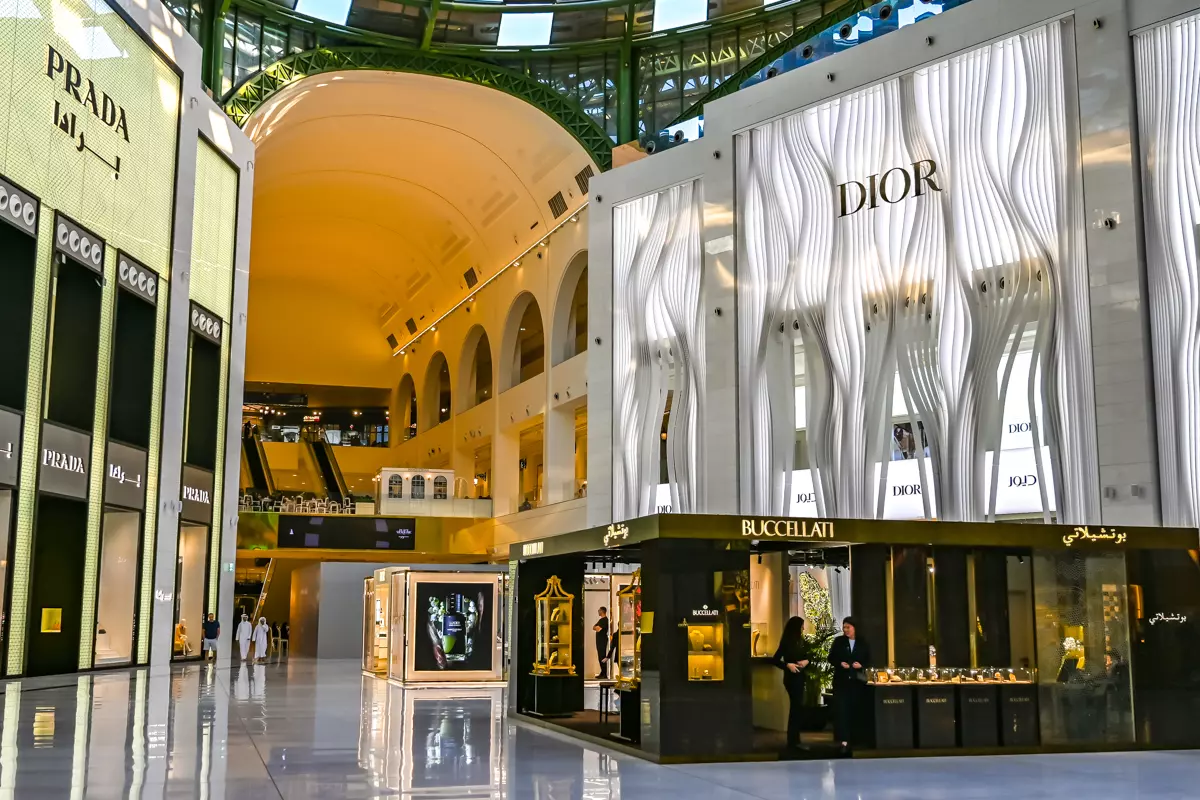
Place Vendôme Mall is one of those places that impresses not only with its size, but also with the variety of activities it offers for visitors of all ages. We stopped by the mall hoping to delight our little traveler, and it turned out to be a great decision. The Trocadero theme park inside the mall is full of play areas, arcade games, carousels, go-karts, and all kinds of other attractions that allowed him to burn off some energy — while I enjoyed a moment to rest. Everything is designed so that even if a child gets bored with one activity, there’s always another one nearby to catch their attention.
The mall itself stands out for its architecture and grandeur. It feels as if you’ve stepped into a small city where everything has been carefully designed down to the smallest detail. Here you’ll find luxurious brands like Louis Vuitton, Dior, and Chanel, as well as more everyday stores such as Zara, H&M, Adidas, and Sephora.
One of the mall’s most striking highlights is the dancing fountains located just outside. They attract the biggest crowds after sunset. The combination of water, lights, and music creates an impressive show.
Fountain Show Hours: The show takes place every hour, from Sunday to Wednesday between 17:00 and 23:00, and from Thursday to Saturday between 15:00 and 23:00.
Fairmont Doha
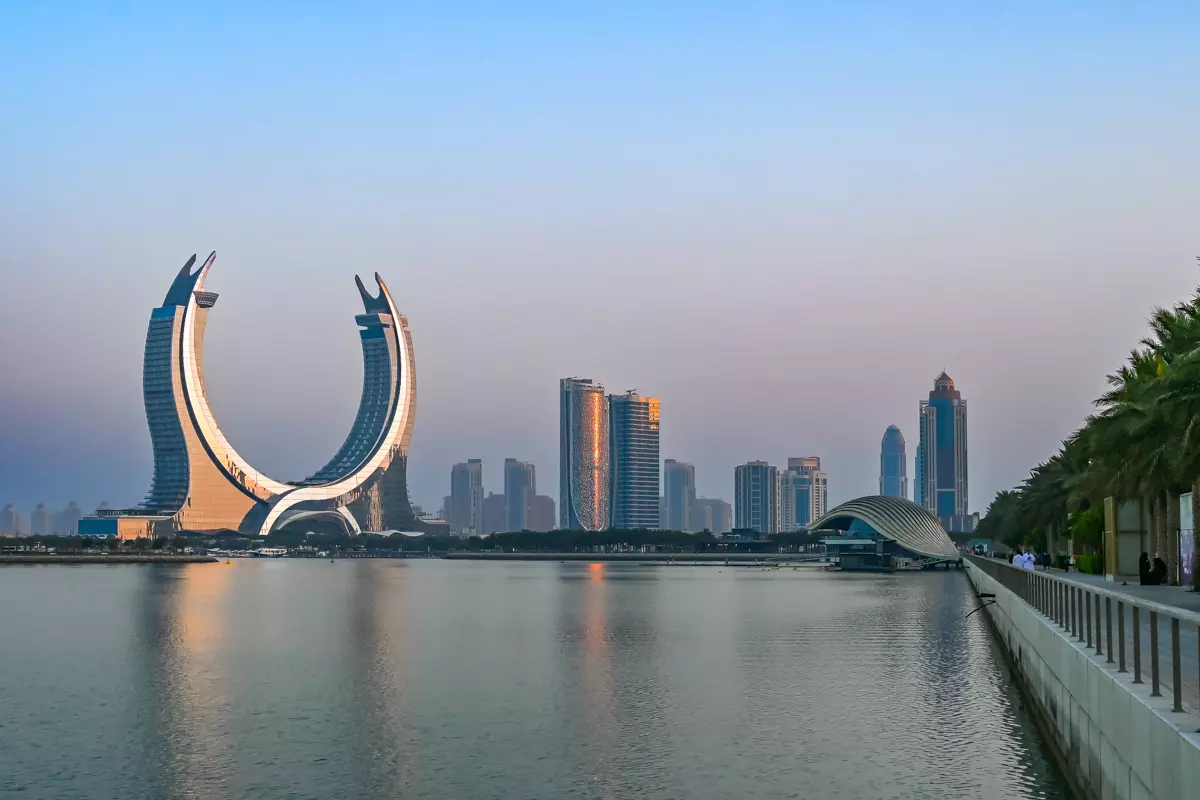
Fairmont Doha is located in the Lusail district and immediately catches the eye with its distinctive and unusual architecture. Even from a distance, the building appears modern and unique.
The hotel is easy to reach on foot from Place Vendôme Mall, taking around 15–20 minutes. Once you reach the promenade, the Fairmont emerges in full view, and the warm colors of the sunset highlight its shape even more, giving the impression that the building speaks for itself.
Although I didn’t go inside, I did some research and learned that Fairmont Doha features 362 rooms spread across 36 floors. The interior is dominated by marble, dark wood elements, and metal details, and the lobby houses an impressive 57-meter-tall chandelier. The entire design is inspired by the aesthetics of a luxury yacht, with plenty of glossy surfaces, curved lines, and spacious areas.
Accommodation: Plan your trip and book Fairmont Doha in advance.
Qanat Quarter
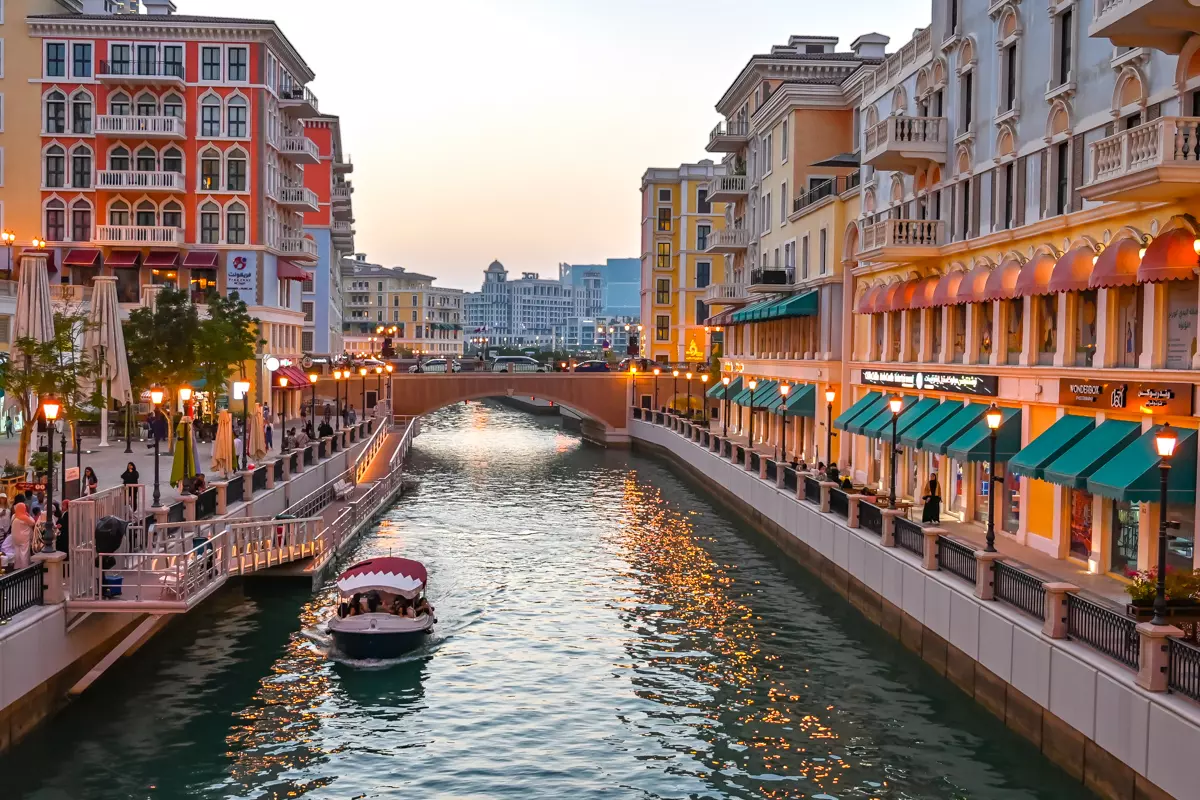
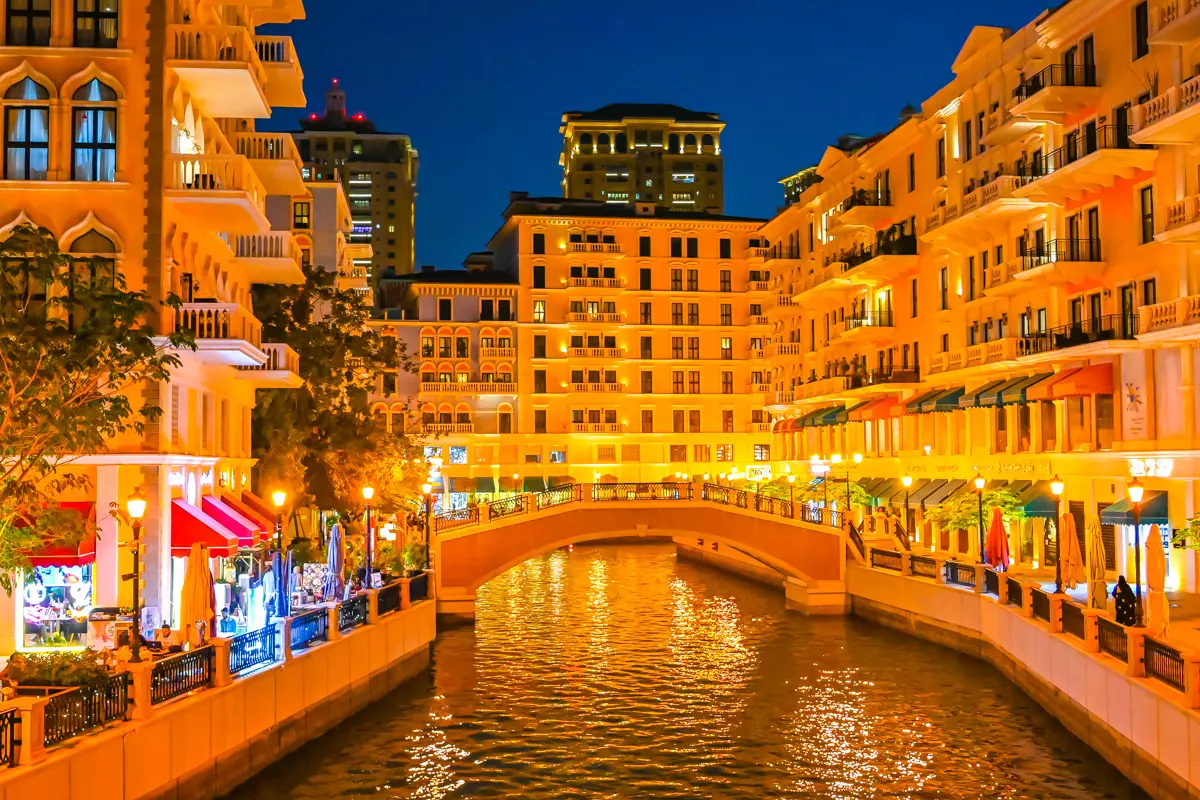
Qanat Quarter is one of the most colorful and probably one of the most romantic places in all of Doha. Here you can stroll through a neighborhood that resembles Venice. Pastel-colored buildings, small squares, bridges, and canals make you feel as if you’ve been transported to Italy.
Photographers and influencers often gather on the bridges, as this place is a true gem for anyone who loves taking photos. Every little street looks as if it were designed especially for beautiful shots. The cafes along the canals are perfect for enjoying a cup of coffee, having dinner, or spending time in creative art workshops.
Tip: Visit Qanat Quarter in the evening or just before sunset. The reflections of the lights on the water create an even cozier atmosphere.
Discover: Private Doha City Tour with Certified Guide.
Gewan Island
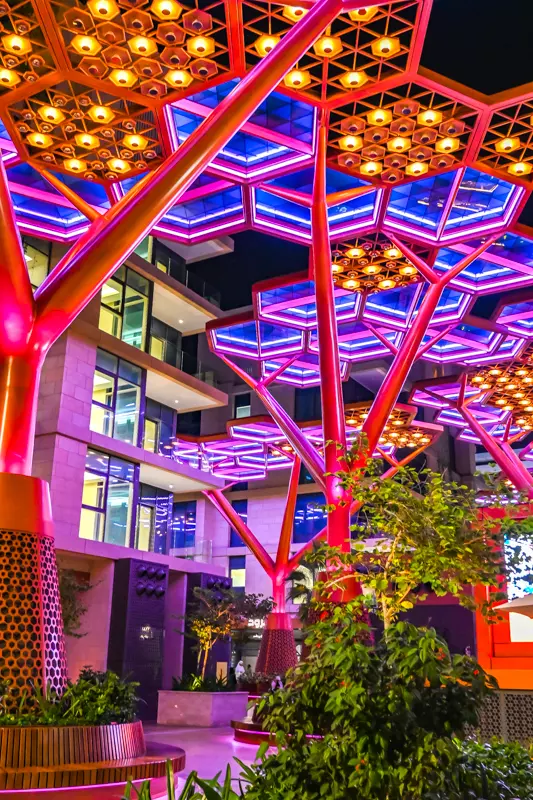
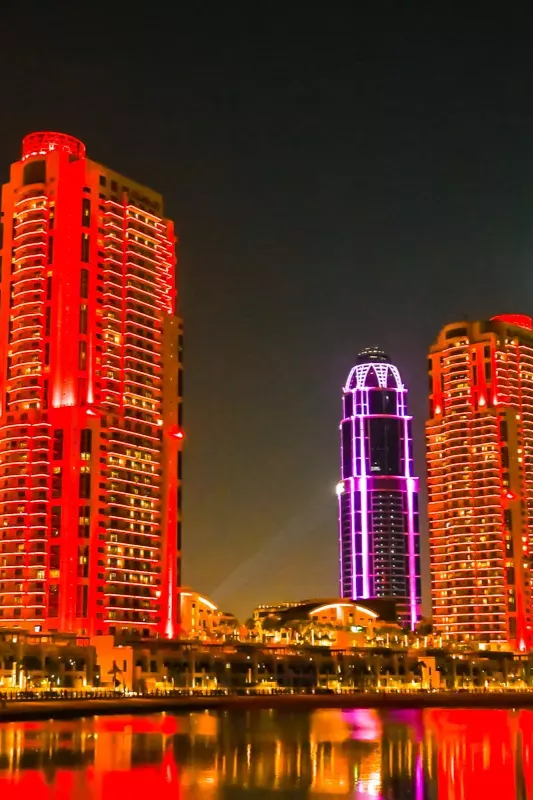
Just a few minutes’ walk from Qanat Quarter, you’ll find yourself in another unique spot in Doha — Gewan Island. It’s a modern, newly developed, and still-growing district that already impresses with its futuristic architecture and striking open spaces.
The main attraction on this island is Crystal Walk — a several-hundred-meter-long promenade with glass-floor display boxes featuring various crystal installations. Around 10 tons of crystals were used here, making the entire area shimmer, especially in the evening. Elegant crystal-shade canopies stretch above the walkway, along with two impressive 5-meter-tall crystal clocks that give the space a truly special atmosphere.
Although exploring Crystal Walk was interesting, the biggest highlight for me was the bridge connecting The Pearl and Gewan Island. The views from there were breathtaking. The skyscrapers glowed beautifully against the dark horizon, the city lights reflected on the water, and the music playing around created a magical atmosphere.
Mina District
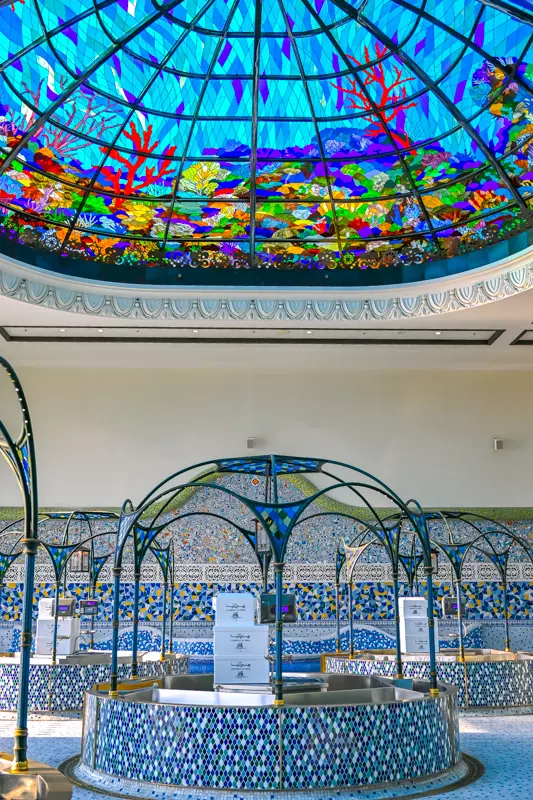
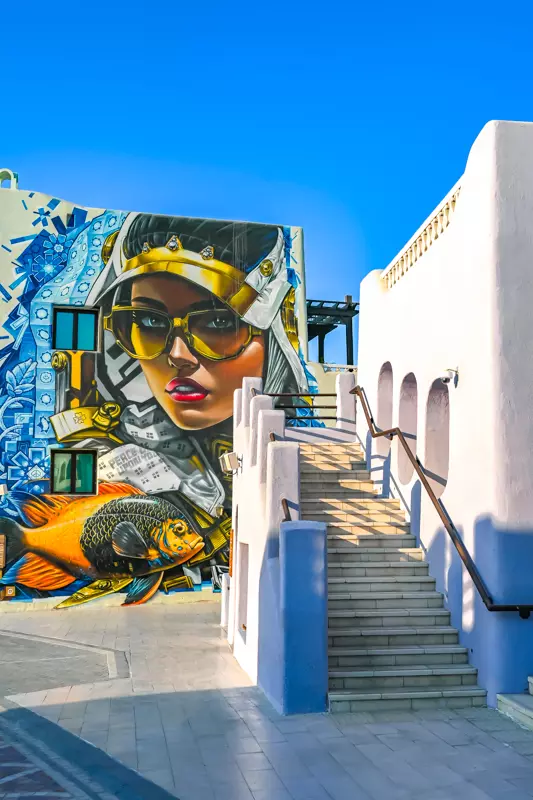
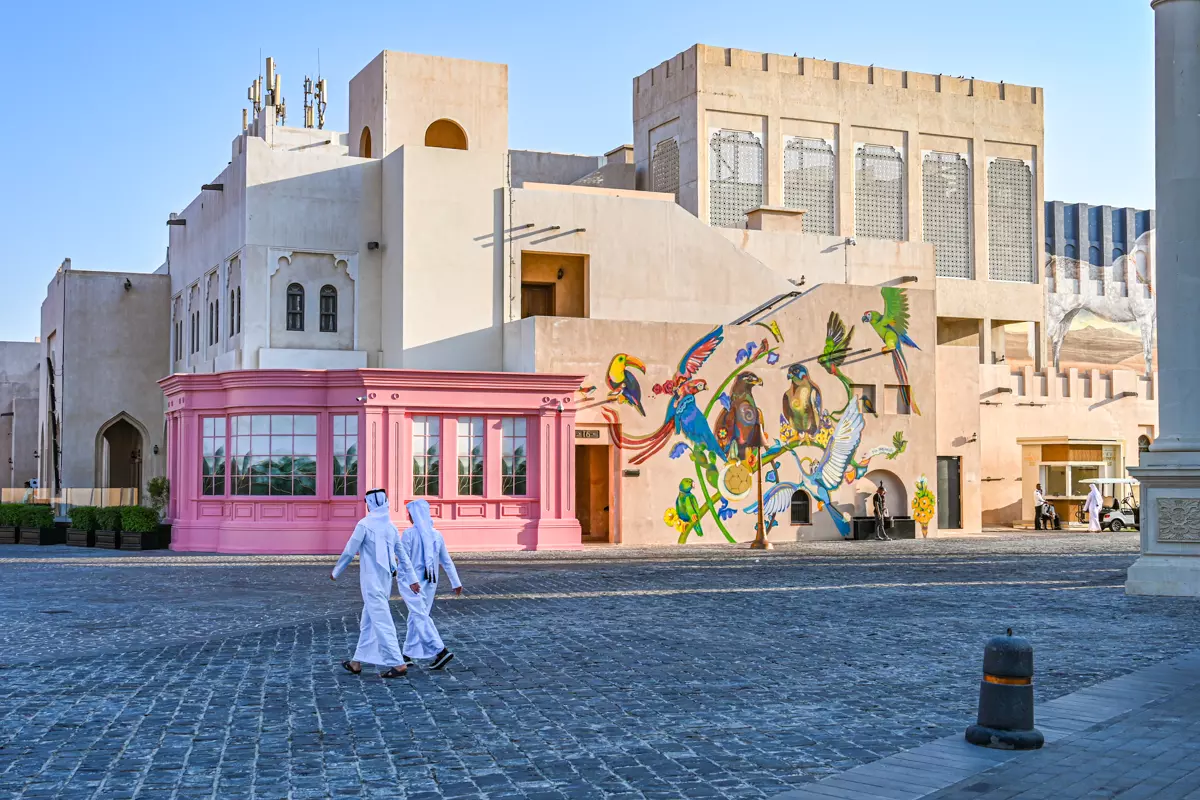
Doha is full of places that, quite literally, keep surprising you — and Mina District is one of them. Here, colorful buildings with artistic murals and narrow streets turn the neighborhood into a charming artistic corner. Everything is neat, clean, and beautifully maintained, making a stroll through the area truly enjoyable.
Mina District also offers plenty of cafes, restaurants, and small boutique shops. In the evening, the neighborhood becomes even livelier.
The Mina Fish Market located here is probably the most elegant and clean fish market I have ever seen. It’s not the typical chaotic market where different and not always pleasant smells blend together. Instead, it’s a large, bright space with colorful windows, spotless counters, and not a trace of unpleasant fish odor.
Right next to the Mina district runs a coastal promenade that is a popular evening walking spot for both locals and tourists. Mina District is definitely worth a visit and easily ranks among the top things to do in Doha.
Parks In Doha
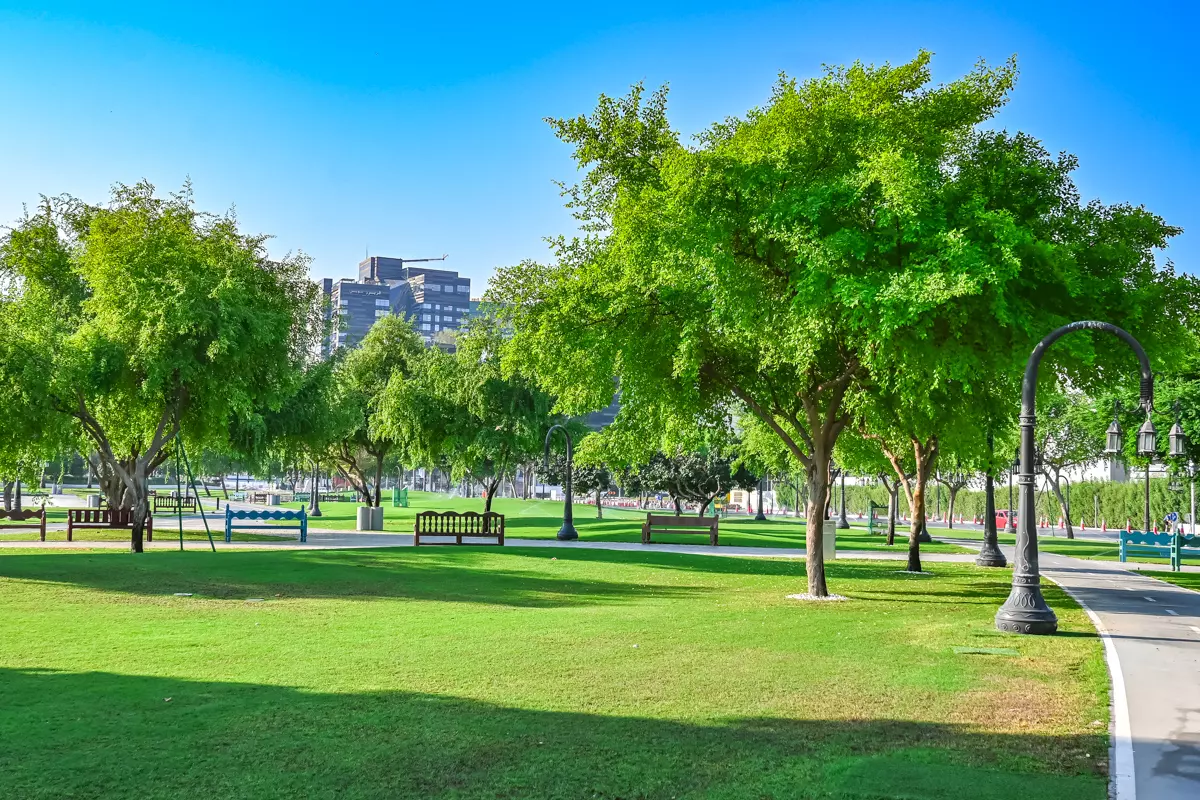
Doha has many wonderful green spaces where you can escape the city buzz and enjoy a peaceful walk. The parks here are clean, well maintained, and offer beautiful views of the city’s modern skyline.
One of the most popular spots is Oxygen Park, located in Education City. It’s a modern park with hills and walking paths, and in the evening it welcomes visitors with beautiful lighting. Athletes gather here to work out, children run around and play, and families come for picnics.
Al Bidda Park, stretching along the Corniche, is one of the largest parks in Doha. Long pathways, open green areas, and stunning views of the Arabian Gulf make it a perfect oasis for taking a break from the pace of the city.
MIA Park offers one of the most beautiful views of Doha’s skyline. It’s a great place to spend an afternoon or evening.
Finally, it’s worth visiting Lusail Crescent Park in the modern Lusail district. It’s a contemporary and aesthetically pleasing park with long promenades perfect for walking and relaxing.
Sands Beach Club
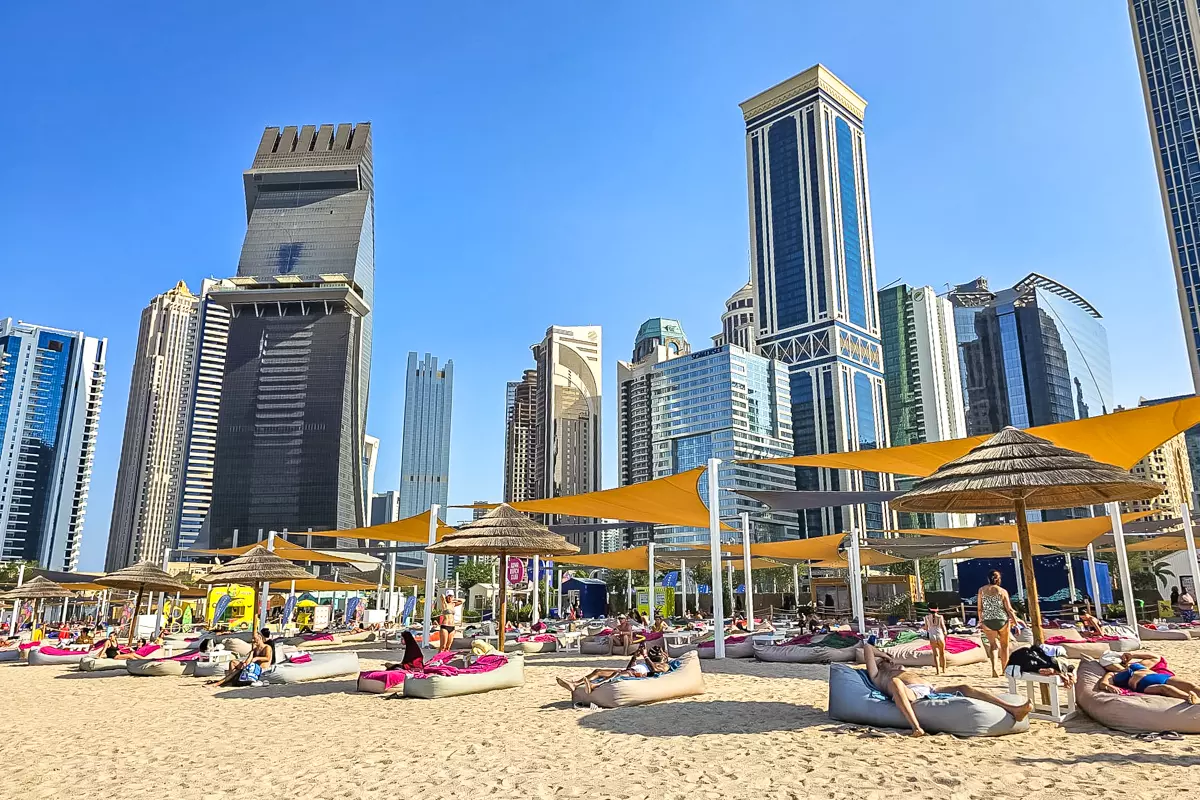
There aren’t many good tourist-friendly beaches in Doha, but I really liked Sands Beach Club. Everything here is designed to make your time as comfortable as possible.
On the beach, you’ll find soft, comfortable sunbeds with shades above them to protect you from the sun’s heat. What pleasantly surprised me was that I received a towel and a bottle of water upon entering. Although I travel a lot, this was the first beach where I experienced such thoughtful care for visitors.
However, bringing your own food or water onto the beach is not allowed. For those who want more activities, the beach offers table tennis, billiards, and water sports, so you definitely won’t get bored. There are also several cafes, as well as showers, changing rooms, and music playing throughout the day.
Another convenient aspect is that some hotels have agreements with this beach. Since we were staying at DoubleTree by Hilton Doha – Old Town, we were able to access the beach for free, even though it normally requires an entrance fee. On top of that, the hotel provided complimentary transport to and from the beach, so we didn’t have to worry about anything.
Discover: Top Beach Adventures Along Doha’s Coastline.
Education City
Education City is a modern district in Doha, known for its universities, cultural spaces, and sports facilities. It’s a calm, clean, and well-designed area that’s easy to explore on foot, even if you’re just visiting and not connected to the universities.
One of the main attractions for visitors is Oxygen Park. Nearby, you’ll also find the Education City Mosque, a modern mosque with unique architectural forms, as well as the Qatar National Library, an impressive and large-scale library. The district is filled with art installations and well-kept public spaces, making Education City a perfect place for a peaceful stroll or a relaxed way to explore the city.
What To See Near Doha
There aren’t many attractions outside of Doha, but a few are definitely worth visiting. I saw only the ones that interested me most, and I genuinely recommend checking them out.
Sheikh Faisal Bin Qassim Museum
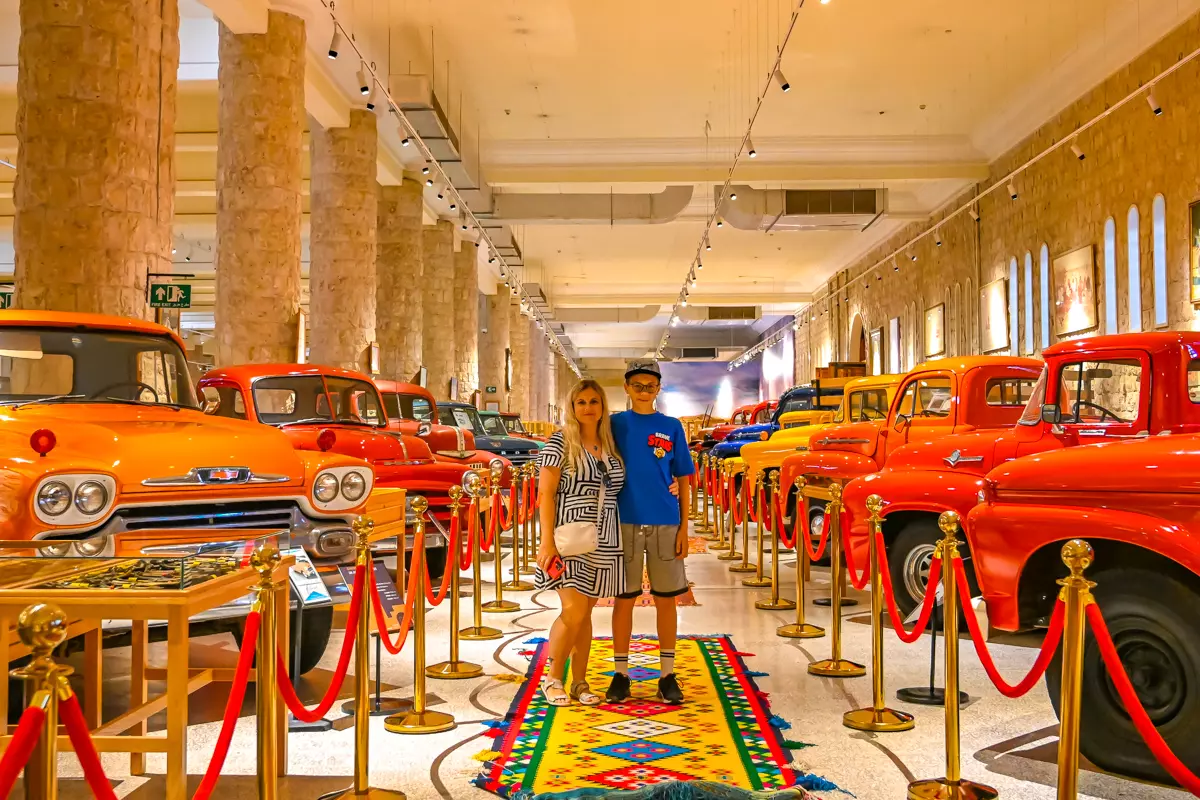
One of the top things to do around Doha is a visit to the Sheikh Faisal bin Qassim Museum. Located in a large complex about 35 kilometers outside the city, the museum showcases over 40,000 items presented across various themed halls.
Here you’ll find around 400 classic cars, more than 600 handmade carpets, historical weapons, coins, Islamic art pieces, clothing, household items, traditional Qatari dhow boats, reconstructed scenes of daily life. The museum also features rare manuscripts, early Quran copies, and even a traditional Syrian residential structure transported from Damascus.
Each section feels like a world of its own, making the museum truly remarkable. I spent four hours here, and it still didn’t feel like enough. In my opinion, this is not only the most impressive museum in Qatar — it’s probably the best museum I’ve ever visited.
Ticket Price & Opening Hours: The museum is open Monday to Thursday from 9:00 to 17:00, on Fridays from 14:00 to 19:00, and on Saturdays from 10:00 to 18:00. Sunday is a rest day. The ticket price for adults is €12 (50 QAR), and admission is free for children under 12.
Al Shahaniya Camel Racetrack
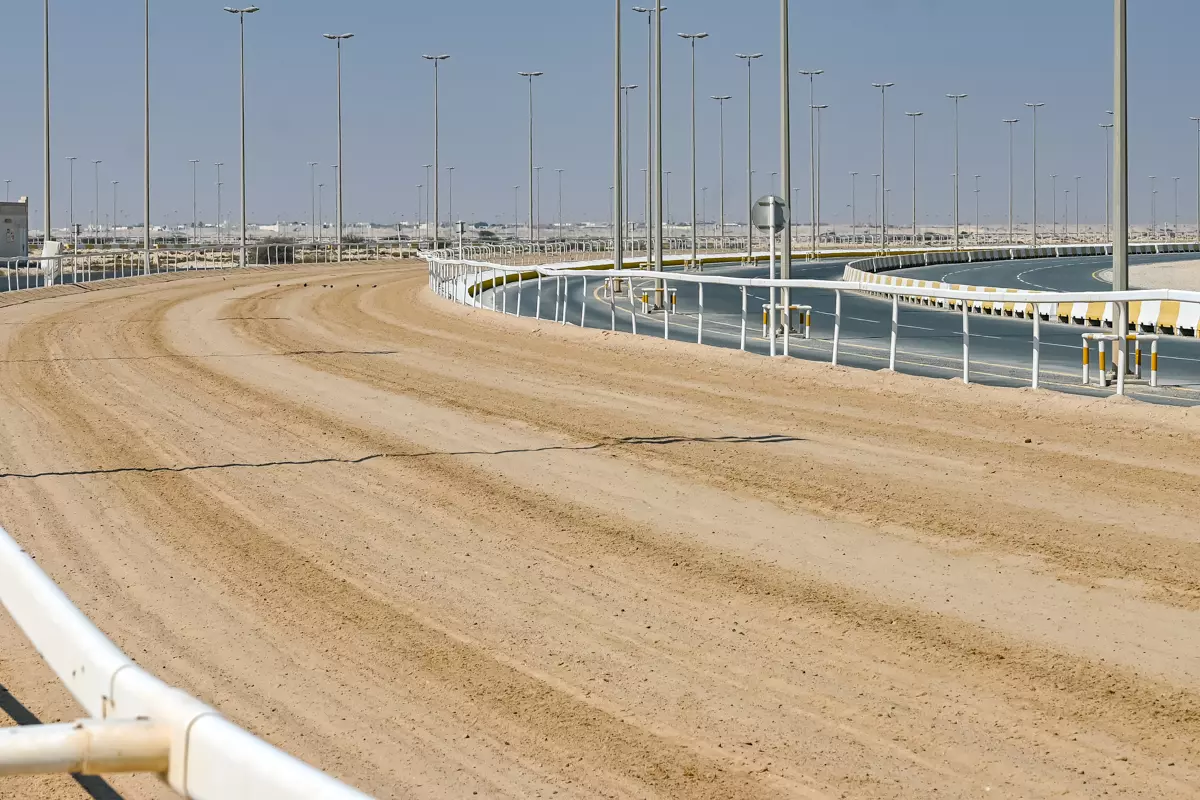
Al Shahaniya Camel Racetrack was one of the places I really wanted to visit. It was difficult to find accurate race schedule times, so we took a chance and went there hoping that the races would be happening. Unfortunately, we weren’t lucky. All we saw were camel enclosures, training areas, and a vast open space in the middle of the desert. This place is convenient to combine with a visit to the Sheikh Faisal Museum, as both attractions are on the same side of the city.
When the racetrack is active, traditional camel races, a beloved local pastime, take place here, and it would certainly be fascinating to watch them. The camels are controlled by robot jockeys, which may look a bit strange at first but are actually quite interesting and modern. From what I later learned from locals, the races usually take place from November to April, most often early in the morning.
Desert Safari
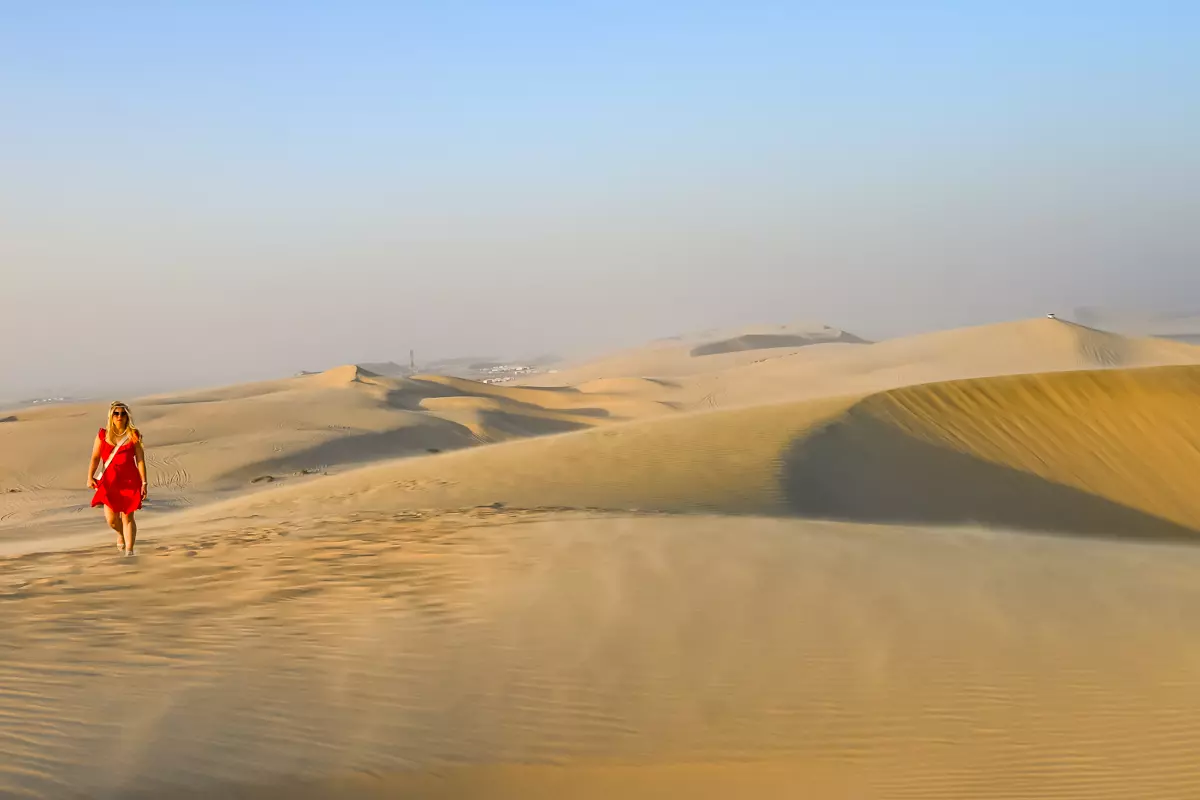
If you’ve never tried it elsewhere, visiting Qatar is a great opportunity to book a desert tour. Just an hour’s drive from Doha lies the vast Khor Al Adaid area, where massive golden sand dunes meet the blue waters of the Persian Gulf.
One of the most exciting activities is dune bashing, riding in a 4×4 across the sand dunes. Skilled drivers expertly maneuver between the high dunes and slide down their slopes, making your heart race and, at times, even prompting a small scream. We were lucky because our driver was a real professional, and his driving tricks sent our adrenaline levels soaring.
In the desert, you can also try other activities such as quad biking, sandboarding, or camel riding. Camel riding didn’t feel enjoyable to me, as everything seemed too staged and overly touristy, almost like a conveyor-belt experience. It made me think back to my time in the Wahiba Sands desert, back when tourism in the area was only just beginning. Everything there felt more natural, authentic, and genuinely heartfelt.
Of course, one of the most memorable moments was watching the sunset in the desert. Those who want to extend the evening can enjoy dinner under the stars, complete with traditional Qatari dishes and live music. Some safari tours even offer overnight stays in desert camps.
Tip: If you’re heading into the desert on a windy day, be sure to bring sunglasses, a scarf, and comfortable clothing. They will protect you not only from the sand but also from discomfort.
What To Do In Doha With Kids

There is no shortage of activities for children in Doha. The city offers plenty of modern, family-friendly places where you can easily spend an enjoyable day.
One of the most popular spots in Qatar’s capital is Villaggio Mall. This shopping and entertainment center features a Venice-style canal with gondolas, as well as a large amusement park called Gondolania Theme Park. Nearby Aspire Park is perfect for a walk around the lake, renting scooters, or having a family picnic. You’ll also find KidZania Doha and Jungle nearby, both of which are especially loved by children. In almost every major mall, you’ll find a variety of entertainment options for kids, ranging from playgrounds to mini rides and virtual-reality zones.
I noticed that Doha offers many activities for younger children, roughly up to 8–9 years old, but the selection for teenagers aged 12–16 is much more limited. Qatar does have several water parks, such as Desert Falls Water & Adventure Park, and Meryal Waterpark, but none of them match the size or quality of the ones I’ve visited in the UAE. Since we had a two-night stopover in Abu Dhabi, we took the opportunity to visit the Yas Waterworld park, and for that reason we skipped similar attractions in Doha.
Another thing I noticed is that quite a few amusement parks in Doha don’t offer a single entrance ticket. Instead, they charge separately for each ride or activity. At first this seems convenient, but in the end the total amount adds up quite significantly. The prices for these activities are quite high, so we only visited the Inflata and Trocadero parks with our child.
Tickets: Book your tickets to Desert Falls or Meryal Waterpark online in advance.
Things To Do In Doha: On a Map
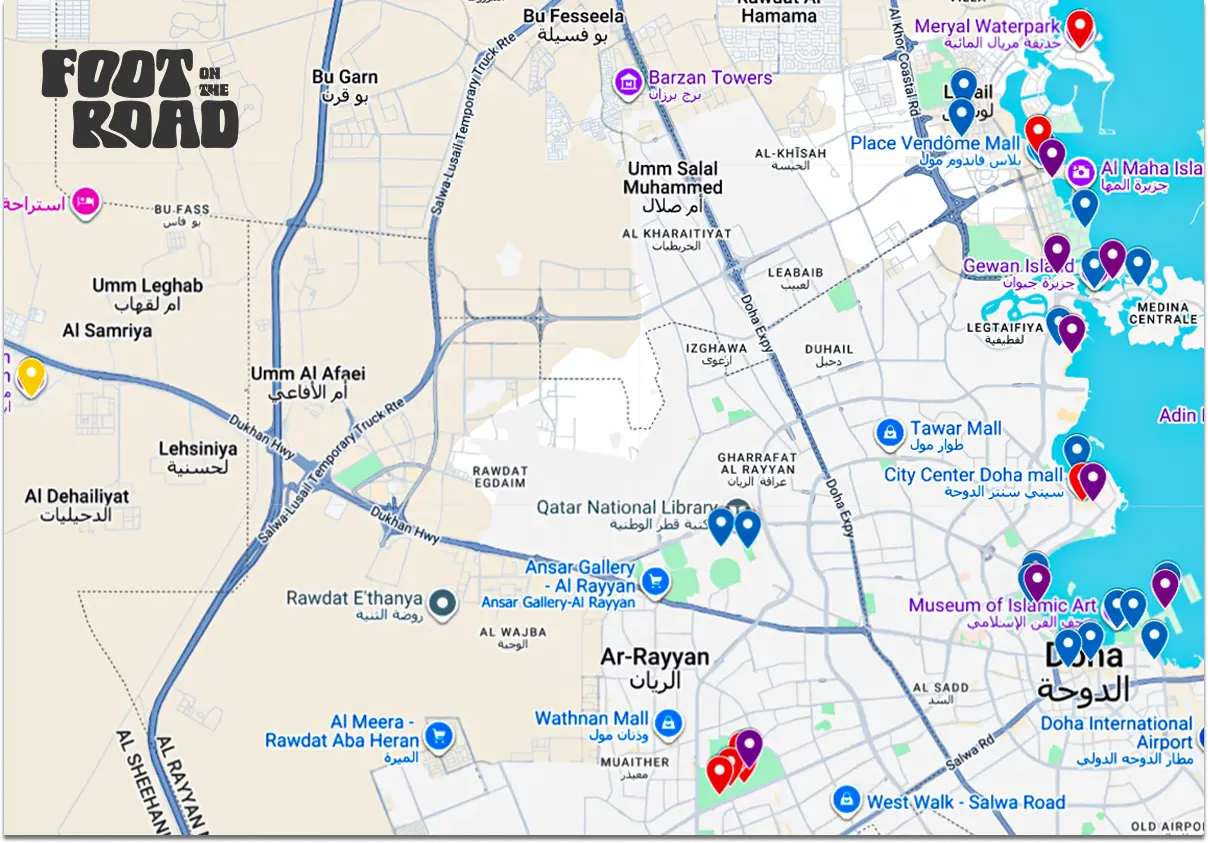
How to Use the Map: To explore the map, simply click on the image. A map window will open, displaying various icons. I’ve marked the main attractions in blue and nearby sites in yellow. Things to do in Doha with kids are highlighted in red, and the best spots for photographing Doha’s skyline are marked in violet. To get more details about a specific location, click on the icon. I hope this map will be useful for your travels. Safe journey!
How To Get To Doha
Doha is easily accessible from almost anywhere in the world, as Hamad International Airport is one of the most modern and active airports in the region. Hundreds of international flights operate here every day, so travelers have plenty of convenient and fast connections.
Qatar’s national airline, Qatar Airways, offers numerous direct routes to cities in Europe, Asia, and beyond. Doha is also served by Turkish Airlines, Lufthansa, Etihad Airways, Flydubai, and other major carriers, making the range of available routes very wide. Most travelers connect through Istanbul, Dubai, or Abu Dhabi.
I personally flew to Qatar from Warsaw with Etihad Airways. I had a free 2-night stopover in Abu Dhabi, which gave me the opportunity to enjoy the Yas Island water park as well. The tickets with Etihad cost only €330 per person. It was definitely a great price, especially considering the route and the quality of service.
The Best Time To Visit Doha
The best time to visit Doha is from November to March, when the heat eases and the weather becomes more pleasant, ideal for exploring the city and enjoying seaside walks. During this period, temperatures usually range between 20–28°C, allowing you to enjoy both sunny mornings and comfortably warm evenings. In summer, especially from June to September, the heat becomes extreme and often exceeds 40°C, making it quite difficult to spend time outdoors.
I visited Doha at the end of October, and the weather felt like summer. Daytime temperatures stayed around 33–35°C. Although mornings and evenings were slightly cooler, the high daytime heat was truly exhausting, making shade or air-conditioned spaces essential.
Average Temperature
Places To Stay In Doha
Doha offers a wide range of accommodation options, from simple and affordable hotels to luxurious complexes with stunning views and impeccable service. Below are a few recommendations for different budgets.
Budget Hotels
- Kingsgate Hotel Doha by Millennium Hotels – simple but tidy, this hotel is located in the city center. The location is convenient, especially if you want easy access to the main sights.
- Premier Inn Doha Airport – this reliable and clean option near the airport works well if you’re traveling on a budget and need a comfortable place to sleep without extra luxury.
Mid-Range Hotels
- Best Western Plus Doha – a comfortable pick near the Corniche, offering spacious rooms, free Wi-Fi, and a good location for both relaxing and exploring the city.
- Riviera Rayhaan by Rotana Doha – this mid-range hotel in the city center features a rooftop pool, a restaurant, and a solid price-to-quality ratio.
- I stayed at DoubleTree by Hilton Hotel Doha – Old Town, and it was an excellent choice. The rooms are spacious, the staff very friendly, and the location extremely convenient, as you can walk to both the Corniche and Souq Waqif. You can read my honest review of this hotel here.
Luxury Hotels
- The Ritz-Carlton, Doha – known for its beautiful views, spa, several pools, and top-level service, this hotel is ideal if you’re seeking true comfort and relaxation.
- Mandarin Oriental Doha – modern and stylish, this hotel stands out with its elegant design, excellent restaurants, and impeccable service.
Also read: Where To Stay In Doha – 5 Best Areas
How To Get Around Doha
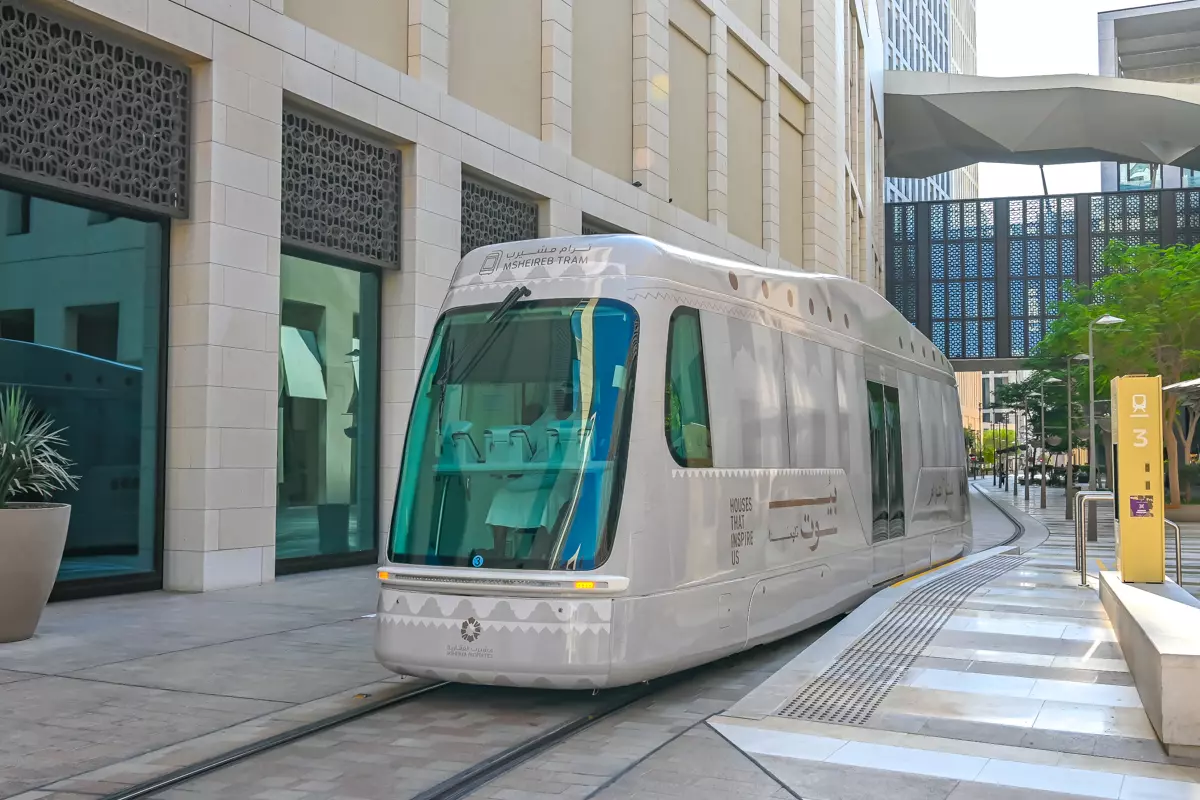
Doha is a modern and rapidly growing city with a well-developed public transport system. You can get around by metro, buses, ride-hailing apps, or simply on foot.
By Metro
The Doha Metro is fast, reliable and one of the most economical ways to get around the city. The system has three lines: Red, Green and Gold, linking the city centre with major districts such as Msheireb, West Bay, Lusail, Katara, Education City and Hamad International Airport.
The metro operates from early morning until late at night (on Fridays it begins service in the afternoon). A single journey in the standard class costs €0.50 (2 QAR) with a day cap of €1.50 (6 QAR). You’ll need a Travel Card, available at any station, which you can easily top up with cash or card.
By Bus
The bus network in Doha, operated by Karwa, covers the city well and reaches many outlying districts. The service uses the Karwa Smart Card for all routes. Most buses start around 4 a.m. and run until about midnight daily. A few specific routes, such as L533, T612 and T613, operate 24/7. All buses are air-conditioned and follow a regular schedule.
By Taxi/Ride-Hailing
Using taxis and ride-hailing services is inexpensive and one of the most convenient ways to travel around the city. The official Karwa taxis operate throughout Doha and use meters, so there’s no risk of being overcharged.
During my time in the city, I mostly used Uber or Karwa, which I found much more convenient than other transport options, and surprisingly affordable. Even a longer trip outside the city to the Camel Racing Track, about 40 km from my hotel, cost me only €12 (50 QAR).
Where To Photograph Doha’s Skyline
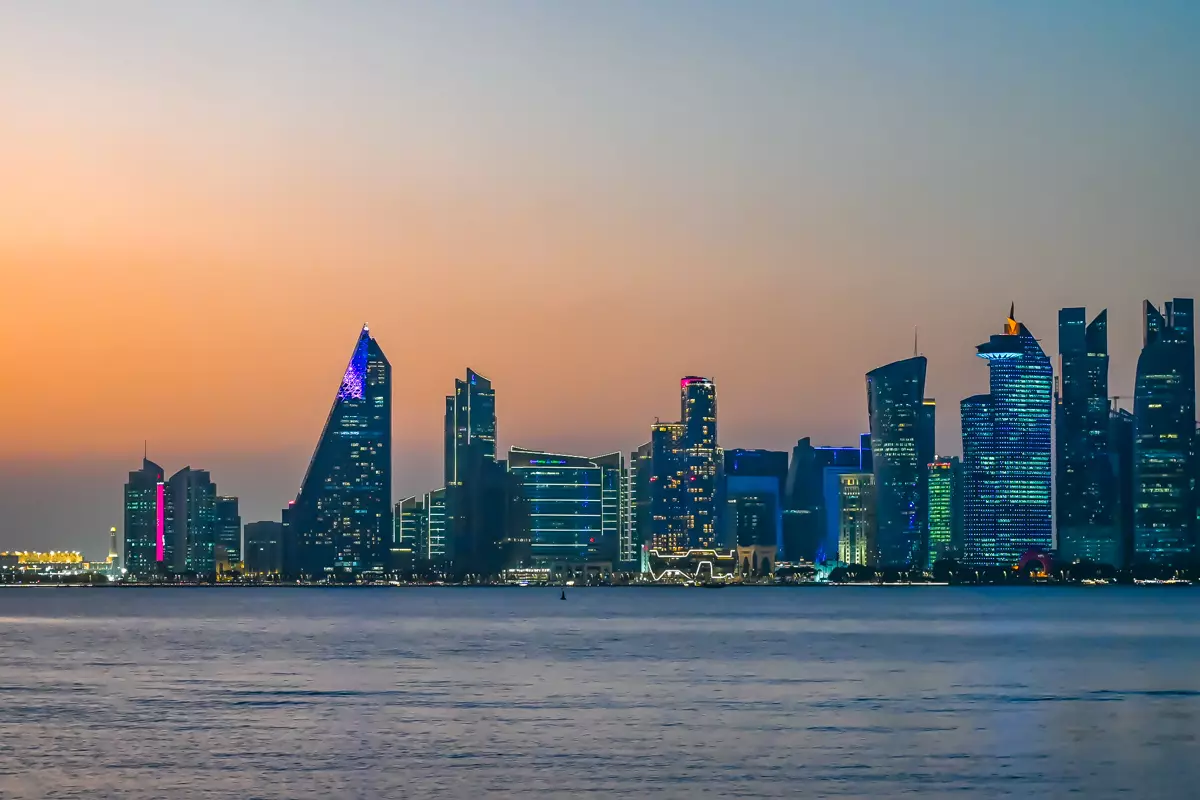
Capturing Doha’s futuristic skyline is a real pleasure. The city is full of modern architecture, vibrant lights, and dynamic perspectives. Below is a list of locations that, in my opinion, are the most impressive and perfect for those looking for standout shots.
Doha Corniche
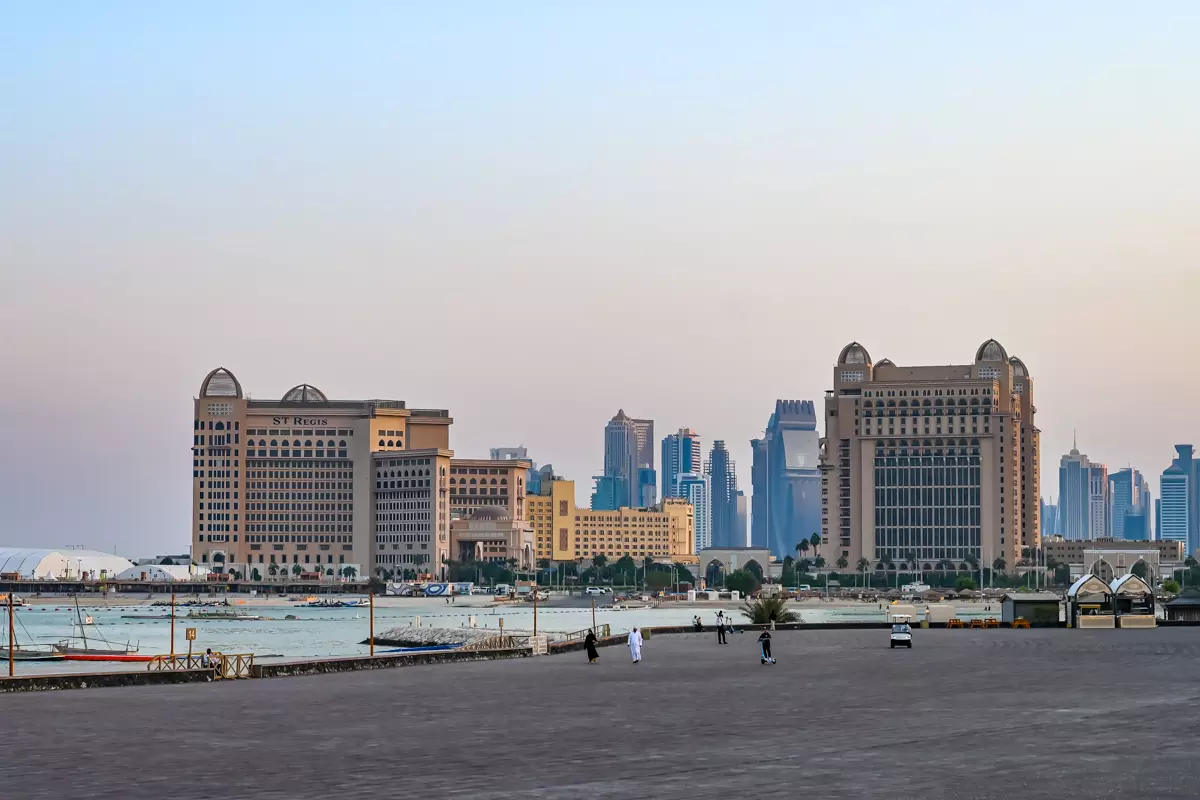
The Corniche is one of the most iconic places for photographing the entire Doha skyline. In the evening, when the skyscrapers light up in different colors, the view becomes especially beautiful.
MIA Park
MIA Park offers one of the most picturesque panoramas in Doha. There’s also a small hill that gives you a slightly elevated viewpoint. Here is the exact spot from which you can take the photo you see above.
Katara Beach
Katara Beach provides a different angle where the skyline appears a bit farther away, but it’s no less impressive. The combination of beach, water, and skyscrapers in the distance creates an interesting contrast.
Lusail Marina Corniche
Lusail is one of the most modern districts, filled with sleek buildings and elegant architecture. From this point, you get excellent views of the bay and the Fairmont Hotel, and at night the water becomes a perfect surface for reflections.
Gewan Island
Gewan Island is another great spot for skyline photography. The bridge connecting Gewan to The Pearl offers a fantastic stop for striking shots.
Viewpoints and Rooftops
Many hotels and restaurants offer panoramic terraces or rooftop bars with beautiful views of the city. These are ideal places for night photography. Popular spots include The Torch Doha with its 360-degree panoramic views, the stylish rooftop terrace at Mondrian Doha, and the JW Marriott Marquis.
FAQs About What To See In Doha
Do I need a visa to visit Doha?
Many nationalities can enter Qatar visa-free or get a visa on arrival. It depends on your passport, so it’s best to check the information on Qatar’s official visa website before traveling.
What is the best time of year to visit Doha?
The ideal time is November–March, when the weather is mild and perfect for sightseeing. Summer months can reach 40–45°C, making outdoor activities challenging.
Is alcohol available in Doha?
Alcohol is not served in regular restaurants. You can find it only in licensed hotel bars and some upscale venues, and it tends to be expensive.
Can you drink tap water in Doha?
Yes, tap water is treated and safe, but many people prefer bottled or filtered water because building tanks and pipes can affect quality.
Do I need cash when visiting Doha?
No. Cards are accepted everywhere in Doha, so you won’t need cash. I didn’t use any during my trip.
How can I get around the city easily?
The metro is fast and cheap. Uber is widely used and very affordable. Walking is possible in some areas, but heat can be intense.
Is Doha safe for tourists?
Yes. Doha is considered one of the safest cities in the world, with very low crime rates. You can walk around comfortably even late in the evening.
What should you bring back from a trip to Doha?
Popular souvenirs include spices, dates, saffron, oud and Arabic perfumes, handmade jewelry, traditional textiles, and small items from Souq Waqif. You can also bring local sweets, decorative pottery, and camel-milk chocolate — all easy to pack and great as gifts.
Book your flight
For the best flight deals, I always rely on Skyscanner. Features like Multi-city and Explore Everywhere help me uncover incredible travel opportunities.
Rent a car
Discovercars is my top choice for comparing car rental prices for any road trip around the world. The booking experience is always smooth and easy.
Travel insurance
SafetyWing provides affordable travel medical insurance with global coverage, perfect for digital nomads and long-term travelers.
Book Tours & Attractions
Experiencing a destination to the fullest is easier with a well-planned itinerary. I use GetYourGuide for guided tours and Tiqets for quick access to museum and amusement park tickets.
Protect yourself online by VPN
No matter where I go, I always use NordVPN for secure browsing and to ensure I can access websites that might be blocked in certain countries.
Disclosure: I only suggest companies that I personally rely on. If you use the affiliate links in my posts to book services, I’ll earn a small commission, with no extra cost to you.
Here are the best things to do in Doha. Which one is your favorite? Share in the comments!
Share on

Hi, I’m Evelina, a travel enthusiast who loves nature, peace, and authentic places. I cherish the freedom to explore and learn with each adventure, whether it’s hiking trails, stunning beaches, natural parks, unique architecture, or rich cultural heritage. I hope my experiences inspire you to embark on your own journeys!